“Things are going to work out more often than not. There’s a lot that you think you have to make the decision because one way is right and one way is wrong. And that’s rarely true. “
Barbara E. Murphy
Interview with Barbara
What’s your full name?
Barbara Elizabeth Murphy.
Where’s the Elizabeth from?
That’s an interesting story. Not a given name. My mother wasn’t much on middle names. But it was raised kind of half-assedly as a Catholic. And the best part of being Catholic is that confirmation you get to pick names. And as long as it’s a same name, anything goes. So I just like this end of it. No attachments. No family history with it. I picked Elizabeth for the name and I couldn’t tell you a thing about St. Elizabeth. St. Barbara, I could because she, I believe, is the patron saint of things like construction workers, firefighters. And I really liked that.
My father was a construction marker. So I was felt on some attachment to this saint who represented safety for working people.
And you said this morning you felt like the church abandoned you?
I feel like the church has abandoned a lot of women. Yeah. It’s not offering us true leadership roles for one thing. And particularly the ways in which women are not permitted, the room to choose the size of the families they want, whether or not to become mothers, those are enormous. And I suspect that church is whether to practice growth control essentially. And I don’t know that the Catholic church is any worse than any other churches around or other forms or the religions in terms of believing women should stay married to men who abuse them. But that’s another kind of weak spot. It’s essentially a patriarchal institution. But I do respect women who find room within it to rise above it like those nuns and just they believe that the Catholic church is deeper and truer than the way it’s being lived out right now in the world. And I respect that.
Why did you decide to have kids?
I decided, you know, with a lot of bit life decisions, you don’t exactly make them very hard. Very consciously. I knew, I knew I wanted to be a mother. I didn’t at the time know how many. And, but I did, so with my then husband we decided, yeah, let’s do it. The time is right. Yeah. We did it. And I love it. Nothing changes your life more than becoming a parent. And nothing changes it in all of the fullness of that way. You’ll never be, nothing will ever offer you that kind of joy and nothing will ever offer you that kind of terror. So it’s, you know, there’s, do you know the writer Grace Paley? She was a story writer. She was a Vermont writer. In fact, one of the highlights of my life was coming up for the opening of the Maverick studios 10 years ago, whatever. And she read, and it was, I think, her last public reading before she died of cancer. And it was a wonderful reading. She has a line of, you know, to become a parent is something like never knowing another night’s ease of sleep. So, and, you know, and I do love being a mother. And I think I never made a conscious decision to only have one child. It just didn’t happen. That I, you know, became decided to have another child. And when that marriage ended, I guess I was probably, you know, older than these days. It would have been old enough. I would have been young enough. But at that point, I married someone who had two daughters. So I felt like I kind of got the best and craziest of both worlds. We got step daughters and my son.
What did it feel like? Did you burn birth your son?
I did. It was a hospital birth in 1976. And the bicentennial year. I remember that. And it was a kind of birth that was sort of in vogue at that time called La Boire. And the baby was born and you took La Ma’s glasses back then. We didn’t use anesthesia. And when he was born, the doctor who delivered him immediately, or the nurse, I think it probably was, put him in water. So it was, there’s a lukewarm water that’s kind of part of the birthing ceremony. And they did this at the University Medical Center. And one of them later said it was the loveliest birth she’d ever been part of. So who knows? But it was a hospital birth. I took a little crap for not having a home birth. This is Vermont. People do things like that. And I said, well, you know, this is, I’m not going to take those kind of risks. So it’s not the right temperament for me. Or I don’t have the right temperament for it. It was a good birth.
Do you want to tell me a little bit about your work?
Sure. You know, when it wasn’t well planned, there’s a book I think of a lot called Composing a Life. And it’s written by a woman whose parents were very well known anthropologists. I think Gregory Bateson and maybe Margaret Mead. I’m not sure about this. Yeah. And I think she is Bateson who wrote this. And her thesis in this book, and she profiles four women. One is Sandra Day O’Connor. I think the first woman’s Supreme Court Justice, first president of Spelman College. She’s a former, an architect, early architect, and fourth woman who I can’t remember right now. And, you know, does kind of ethnographies about their paths to their careers, and one of the thesis she has in the book, or I guess the central thesis of the book, is that women do not choose straight line paths to work the way she believes most men do. They’re not kind of beaming straight ahead. That women are much more willing to follow interesting branches that come up for them. And that it holds true to my experience and definitely to my path. I was an English major in college and did sort of administrative assistant work for a while, library research. And then when I came to Vermont and, oh, and I did a master’s degree, I forgot this, in community development. It was kind of a, took a flyer on this when I lived in Brooklyn and went out to Southern Illinois University in Carbondale to do a master’s in community development, which I think was the full name of the degree, from a community development institute. And it was a lot of bad social change in community organizing and so all of Linsky’s model organizing. So it wasn’t exactly a focusing degree. But I came back and met my first husband there and then we moved to Vermont and I was kind of open to whatever work looked interesting. So my first job was at the YMCA in an after school program. It was low income kids. And then this job opened up at the university, which was being part of a study on a kind of the attachment of mothers to low birth weight babies. And then somewhere in there, the community college of Vermont opened a branch in Burlington and they were looking for teachers, faculty members. And they were a lot less fussy then than they would be now. You had to have a master’s degree, but you didn’t have to necessarily have it in what you were teaching. So I applied to teach English comp and they hired me. And it was a pretty interesting, if you’ve done work at a community college. They’re just, you have such regard for the students and what they’re giving up in their lives to be there and what they’re choosing. So I taught a couple of sections of that and then a job opened up at the colleges and academic advisor. And it was a great job. It was kind of three legs. You got to advise students, plan the courses, the curriculum, and hire the instructors to teach. So every piece of the whole operation. And I did that for six years and then the academic dean job opened up. And I applied for that job and got it. So I kind of wandered into higher education. But it felt like a calling. It felt like I was in the right place. And it was around then, 89 or so that I started my MFA in writing poetry at Warren Wilson College. It’s a very good degree program. It works for working people with other jobs because it’s low residency. And I also knew that the MFA was a terminal degree. So it does mean I think there are places now that wouldn’t do this but would hire you to be a college dean or a president in the same way that a law degree is considered a terminal degree or MBA in some places. So I mean I loved the degree program. It’s really hard when they’re over. You have to go back to regular life. But I could do it along with my job. And I think, I can’t remember if I was in the middle of becoming the dean or finishing it up when the dean job opened. And I remember one of my MFA faculty members advising me against it. I mean she said something about how Yates did his best work when he went to the tower. That the more publicly you live and work, the less energy and time and commitment you’re going to make to your writing. And in many ways she was right. Yeah. And she always kind of had a foot in both camps. So I was dean for six years and then the president of the community college left and I did an interim fill in and then I fought for the presidency there. So my first presidency was at the community college of Vermont. And when the president left at this college up the hill, then Chancellor asked if I would consider taking that job. That was a big decision because I was very happy at the community college and there’s a lot about this job that I knew nothing about. I had never had the responsibilities of a physical campus. The community college has this wonderful network of sites around the state. I’d never worked with labor unions and most of the staff and faculty at this college are part of teachers union or staff unions. So, and it meant moving. And it meant moving from Burlington where I was very comfortable. But I was a combination of adventure. And you know, and I loved the college. I mean, I just loved how beautiful it is up here (where?). And I would say, you know, I kept doing my writing, but definitely not with the intensity that people who who fully devote themselves to their writing too. And you see the difference. You know, I don’t have a large body of work. I have a book. But I don’t send stuff out regularly. And I feel like I can go long periods of time without writing. And then I come to something like this and I think I can’t go a day without. But I, you know, I grew up, you know, working class family where money was a constant issue. And I think I never wanted to be anxious about a salary. And I think people who grow up without a whole lot of money can go either way. Well, I know how to do it. I grew up without money. And I’m familiar with it. Or say, I don’t want that. It was a source of a lot of tension in my family. I just didn’t want that anxiety. So I think that was probably part of why I wanted to keep growing a career and be comfortable financially.
How did you learn about sex?
Not from my parents. So it was, I mean, it was a long time ago. So it would have been, and not in school. So I think when kids, I don’t know when people are being educated about sex. And now it would have been in the 50s when I would have thought it would be the time, if I adjusted that to this. Yeah. So it was a girl friend in the sixth grade who explained, she explained intercourse. I’m not sure. She really explained much beyond that. You know, I just remember being stunned by the whole idea of it.
Do you feel like you just had to figure it out alone?
I feel like I did figure it out. Yeah. I figured out in conversation and pamphlets, I think. And then experimentation.
What would you tell yourself when you were at 30?
I think I would tell my younger self to trust that things are going to work out more often than not. There’s a lot that you think you have to make the decision because one way is right and one way is wrong. And that’s rarely true. I think there are a lot of right ways. I think I definitely give myself that advice. I don’t have any sort of good advice about choosing the right partner. I don’t believe either that it’s- there’s someone out there for everybody. I mean, I think there probably is, but it’s often not the person you think it is.
Do you feel like you found the right partner twice or do you feel like you found the right partner the second time?
I feel like I found the right partner the second time. The first time, I think, it was more, you know, we were both in the same place at the same time. We were the only single people in the department that made sense. I admired him immensely. It was an immigrant who came from Ukrainia, had come from a labor camp in Germany where his parents were taken as young Ukrainians. The Nazis hated the Ukrainians. Yeah. So, they used them as laborers during the war. Yeah. And then they got turned into a labor camp and they were taken in by a family from Cleveland. And then we met Roman and I met at the First Masters program. So, I think I was, you know, taken by his story and admired him immensely respected all that he’d accomplished. But I think, you know, I did have a niggling voice. This is probably not right. You know, this is physically, you know, there wasn’t much going on there. I had a, he wasn’t good at completing things, which turned out to be to foreshadow. He didn’t like working that much. So, it wasn’t a great fit. You know, I’m not sorry. We got together. I’m not sorry he fathered my child. I know he drives some of my kid nuts. And I think the second time I really did more fall in love with Tom. And for the right reasons. But I was also smart enough. It was probably in like the authorities to know that nobody is perfect. And, you know, I’ve probably got as many of not just qualities as he does. So, I got smarter about how you make a marriage last and more.
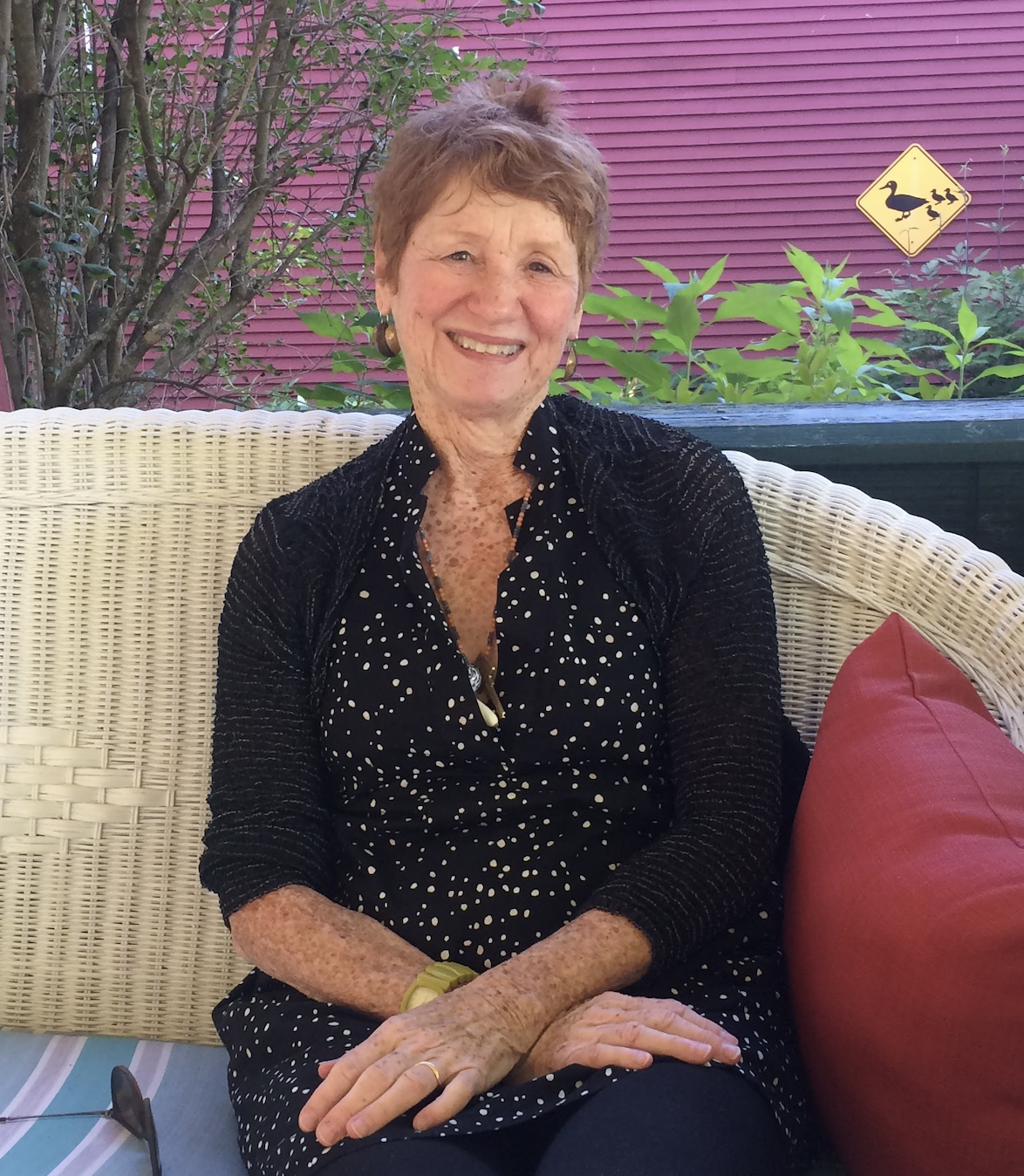
Barbara e. Murphy
Vermont, United States
 The Wise Women Project